Photo: evenfh / Shutterstock
Mike Schuler
A
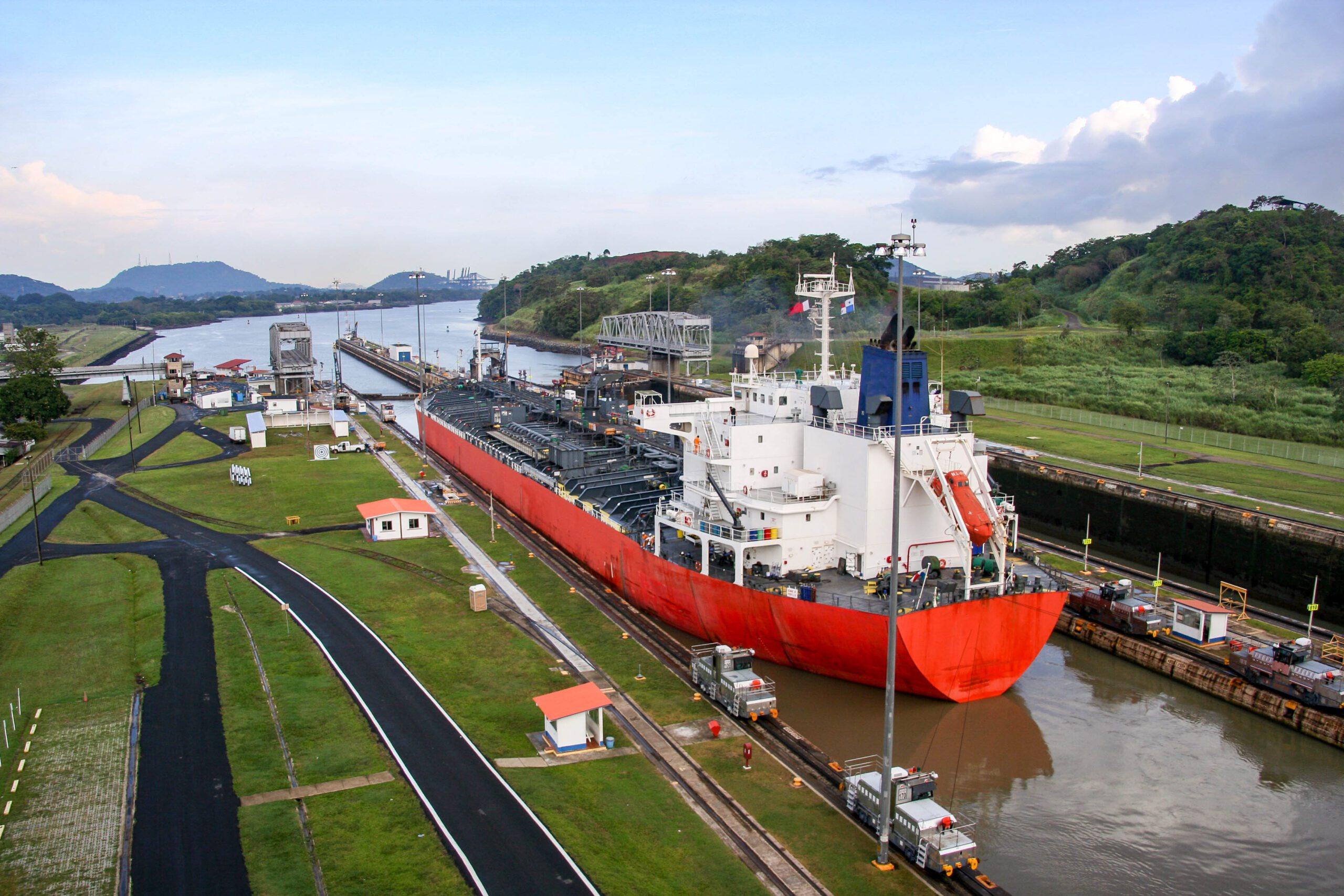
tightening Panama Canal is once again forcing shipowners to weigh longer routes
around South America, but the Swedish Club is warning that Cape Horn and the
Strait of Magellan are far from straightforward substitutes.
In a new
member alert, the marine insurer said worsening water conditions at the Panama
Canal are coinciding with security disruptions around the Suez Canal, Red Sea
and Strait of Hormuz, leaving owners with fewer attractive routing options.
The latest
Panama restrictions are being driven by a strengthening El Niño and a growing
water deficit across the canal watershed. Rainfall from May through August has
been running about 34% below historical averages, while inflows have been
roughly 44% below normal, according to the Club.
The Panama
Canal Authority has progressively reduced the maximum allowable Neopanamax
draft to 48 feet of Tropical Fresh Water and cut the number of available
transit slots as it moves to conserve water.
The ACP
earlier planned to lower the Neopanamax draft further to 47.5 feet on October
1, but postponed that cut this month after reviewing Gatun Lake levels and
weather forecasts.
Daily
capacity is also being reduced. Neopanamax slots were cut to nine per day
beginning September 3, while Panamax capacity was set at 25 daily slots and is
scheduled to fall to 23 on September 15.
The current
situation remains considerably less severe than the historic 2023-2024 drought,
when daily canal transits fell into the low 20s and draft limits dropped into
the mid-40-foot range.
But the
Swedish Club said the bigger issue is what happens if El Niño strengthens into
2027.
That
concern is being amplified by disruptions elsewhere.
Normally,
vessels facing delays or cargo restrictions at Panama could consider routing
through the Suez Canal. But security conditions in the Red Sea and Gulf of Aden
have sharply reduced the attractiveness of that option, while the conflict
surrounding the Strait of Hormuz has pushed additional traffic toward Panama.
“The
southern route is being considered today not because it has become attractive
but because the other options have become harder,” the Club said.
That leaves
the two passages around the southern tip of South America: the Drake Passage
and Strait of Magellan.
Neither
comes without significant tradeoffs.
The Drake
Passage provides a more direct open-ocean route between the Atlantic and
Pacific but exposes ships to some of the harshest weather conditions in
commercial shipping, including heavy seas, violent vessel motions, slamming,
cargo shift and machinery strain.
The Strait
of Magellan provides more shelter but brings its own navigational challenges,
including narrow channels, strong currents and restricted waters.
“Neither
passage resembles a lock transit on a schedule,” the Swedish Club said, adding
that both require a higher standard of voyage planning, weather routing and
crew competence.
Pilotage
can also become complicated. Pilotage through the Strait of Magellan is
generally compulsory under Chilean regulations, although an exception applies
between Bahía Félix and Punta Arenas for vessels making an ocean-to-ocean
transit without navigating internal waters or calling at Chilean ports.
Even in
that section, Chilean authorities strongly recommend using a pilot for certain
vessels, including oil, gas and chemical tankers and passenger ships.
The Swedish
Club warned that the voluntary nature of pilotage in that section can create
charterparty disputes over who ultimately pays.
Where
charterparty language assigns charterers responsibility only for compulsory
pilotage, the cost of voluntarily taking a pilot could fall to owners. The Club
said there is no settled rule governing the issue and recommended that owners
and charterers agree on pilotage and routing costs before a vessel commits to
the passage.
Cold-weather
operations add another layer of risk. The Club highlighted bunker handling
concerns aboard ships that are not designed for prolonged cold-weather
operation, particularly where fuel heating systems may be inadequate.
Emergency
response capability is also limited across southern Chile. A grounding or major
machinery casualty in the region could leave a large vessel far from suitable
salvage resources.
Ultimately,
the Club said the choice of route remains a matter for the master, whose
responsibility for the safety of the ship, crew and cargo cannot be displaced
by charterers.
If the
master determines the Drake Passage is unsafe and instead chooses the Strait of
Magellan, the Club said that decision should be supported by weather forecasts,
routing advice and detailed voyage records in case the decision is later
challenged on cost or liability grounds.
For most
vessels, the Swedish Club said the current Panama restrictions remain
manageable and do not by themselves justify the additional risks of sailing
around Cape Horn.
But that
calculation could change if Canal restrictions deepen. “The southern route
should remain reserved for the cases where Canal waiting times, draft driven
cargo losses and the degraded state of the eastern alternatives genuinely tip
the balance,” the Club said.
Panama
Canal officials have been warning that the developing El Niño could bring an
extended stretch of below-normal rainfall. Former Canal Administrator Ricaurte
Vásquez told gCaptain in August that officials were preparing for the
possibility of roughly eight months of unusually low precipitation.
Traffic has
also remained elevated as disruptions elsewhere reshape vessel routing. Before
the Iran War, the canal was handling roughly 34 ships per day. Traffic later
climbed as high as 40 to 41 vessels per day as additional tonnage shifted
toward Panama.
gcaptain.com


Δεν υπάρχουν σχόλια:
Δημοσίευση σχολίου