Αναζήτηση αυτού του ιστολογίου

27 Ιουλίου, 2022

Απομακρύνεται το ναυάγιο “SLOPS” από τον κόλπο της Ελευσίνας - ΕΝΑ ΜΠΡΑΒΟ ΕΙΝΑΙ ΛΙΓΟ.....

 Το πλοίο κάηκε το 2000 και μάλιστα γέμισε την Μεσόγειο με μαύρο καπνό. Το 2022 ο υεν με επείγουσα διαταγή για την επαπειλούμενη ρύπανση 22 χρόνια μετά..... διέταξε την απομάκρυνση του. Τι να πούμε??   ένα μπράβο δεν είναι αρκετό για την ανικανότητα της διοίκησης γενικότερα...


+++


25 ΙΟΥΛΙΟΥ 2022

Αυτοψία στο ημιβυθισμένο πλοίο που αποτελεί “επαπειλούμενη ρύπανση” για την περιοχή

Με την διενέργεια αυτοψίας ξεκίνησαν οι διαδικασίες για την απομάκρυνση του ναυαγίου “SLOPS”, που βρίσκεται εγκαταλελειμμένο στον όρμο της Βλύχας από το 2007 και αποτελεί σοβαρή απειλή ρύπανσης για τον θαλάσσιο χώρο του Λιμένα Ελευσίνας.

Η αυτοψία στο “SLOPS” πραγματοποιήθηκε από τον Διευθυντή της Διεύθυνσης Προστασίας Θαλάσσιου Περιβάλλοντος Πλοίαρχο Λ.Σ. Γεώργιο Μαραγκό και τον Αντιπλοίαρχο Λ.Σ. Γεώργιο Καλογεράκη με την συμμετοχή εκπροσώπου του Κεντρικού Λιμεναρχείου Ελευσίνας, παρουσία του Διευθύνοντος Συμβούλου του Οργανισμού Λιμένος Ελευσίνας (Ο.Λ.Ε.) ΑΕ κ. Απόστολου Καμαρινάκη και στελεχών του Οργανισμού, την Παρασκευή, 22 Ιουλίου 2022.

Διαπιστώθηκε ότι το ημιβυθισμένο με υπολείμματα πετρελαιοειδούς λάσπης κατάλοιπο “SLOPS” αποτελεί “επαπειλούμενη ρύπανση” και τοποθετήθηκε αντιρρυπαντικό φράγμα με τις προβλεπόμενες άγκυρες σε απόσταση 10 μέτρων περιμετρικά του κύτους, ώστε να διασφαλίζεται η άμεση παγίδευση τυχόν οποιασδήποτε διαρροής.

Οι ενέργειες για την απομάκρυνση του ναυαγίου έχουν τον χαρακτήρα του επείγοντος και διεξάγονται με σχετική απόφαση του Υπουργού Ναυτιλίας και Νησιωτικής Πολιτικής κ. Γιάννη Πλακιωτάκη, αποδεικνύοντας έμπρακτα την ευαισθησία του ΥΝΑΝΠ σε θέματα προστασίας θαλάσσιου περιβάλλοντος.

Οι διαδικασίες υλοποιούνται στο πλαίσιο του Μνημονίου Συνεργασίας που συνυπέγραψαν τον περασμένο Μάιο ο Ο.Λ.Ε. ΑΕ και το Πράσινο Ταμείο σε θέματα προστασίας θαλάσσιου περιβάλλοντος, προκειμένου να αξιοποιηθούν άμεσα διαθέσιμοι πόροι του προγράμματος “Γαλάζιο Ταμείο” για την απομάκρυνση των ναυαγίων από τον κόλπο της Ελευσίνας. Ειδικά για το μείζον θέμα της απομάκρυνσης του “SLOPS” προηγήθηκε ευρεία σύσκεψη- διαβούλευση με πρωτοβουλία του Ο.Λ.Ε. ΑΕ, στην οποία εκλήθησαν και συμμετείχαν αρμόδιοι θεσμικοί φορείς και υπηρεσιακοί παράγοντες, εκπρόσωποι της τοπικής αυτοδιοίκησης και περιβαλλοντικών οργανώσεων της Ελευσίνας, ώστε να εξευρεθεί μία κοινά αποδεκτή λύση για την ασφαλή και περιβαλλοντικά ορθή διαχείριση του κατάλοιπου.

Το «SLOPS»

Το δεξαμενόπλοιο “SLOPS” (Ν.Π. 101781) λειτουργούσε από το 1994 έως και το 2000 ως πλωτός διαχωριστήρας για τη τελική διαχείριση των πετρελαιοειδών αποβλήτων από τα πλοία, υπό την διαχείριση εταιρείας παροχής λιμενικών υπηρεσιών διαχείρισης πετρελαιοειδών αποβλήτων.
Τον Ιούνιο του 2000 κάηκε ολοσχερώς στην Κυνόσουρα Σαλαμίνας, όπου ήταν αγκυροβολημένο. Παρέμεινε εκεί μέχρι το Μάρτιο του 2007, όποτε και οδηγήθηκε ρυμουλκούμενο προς διάλυση στο ναυπηγείο-διαλυτήριο «Αφοί Σάββα» στη περιοχή Βλύχα της Ελευσίνας, όπου παραμένει μέχρι σήμερα. Τον Νοέμβριο του 2008 ξέσπασε και δεύτερη πυρκαγιά σε ό,τι είχε πλέον απομείνει από το «SLOPS», με αποτέλεσμα να απαγορευτεί η συνέχιση των εργασιών διάλυσης του. Στα απομεινάρια του σκάφους ξέσπασε και ακόμα μια φωτιά, τον Νοέμβριο του 2011, ενώ το 2014 ανακλήθηκε η άδεια λειτουργίας του ναυπηγείου- διαλυτηρίου.


Zelenskyy Blasts Greek Ship Owners For Moving Russian Oil - ΑΡΝΗΤΙΚΑ ΣΧΟΛΙΑ ΕΣΤΩ ΚΑΙ ΓΙΑ ΟΡΙΣΜΕΝΟΥΣ ΤΗς ΕΛΛΗΝΙΚΗΣ ΝΑΥΤΙΛΙΑΣ, ΔΕΝ ΜΠΟΡΟΥΝ ΝΑ ΜΕΙΝΟΥΝ ΑΝΑΠΑΝΤΗΤΑ

 Dear Captain Conrad , you are free to apply for zelensky's advisor,  but you cannot make politics thru shipping.... Your comments in the your present story... is at least of someone brainless, with all the respect...

Greek shipping was not stopped in the ww2, American admirals will stop it?? Facts saying that a good source of infos gained by friendly shipping, in which am against, unless serves national interests.

Your favorite president did not make the appropriate in order to save his people from death , and he has the strength to accuse others?? 

Captain , remind you that SHIPPING is the end of the world... so lets enjoy bit more....


+++


Volodymyr Zelenskyy in Port

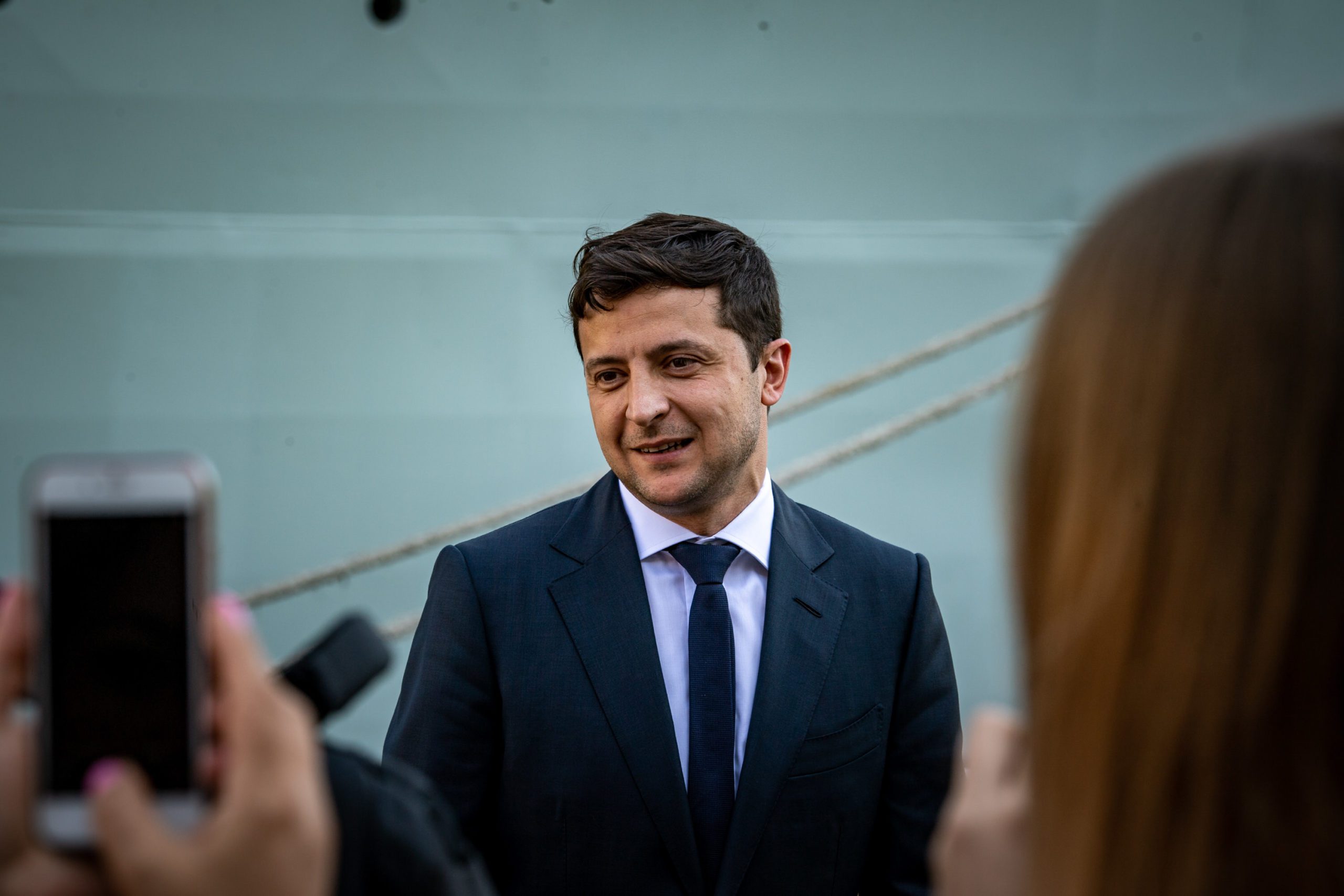
Ukrainian President Volodymyr Zelenskyy, visiting ships in 2019.

John Konrad    July 6, 2022

“We see Greek companies providing almost the largest tanker fleet for the transportation of Russian oil,” said Zelenskyy. “I am sure that this does not meet the interests of Europe, Greece or Ukraine. This is just one example of the need for even greater unity so that Russia is forced to seek peaceful solutions.”

Despite selling oil at a discount, Russia has profited from the increased price of oil while Greek ship owners have profited from the longer voyages Russian oil must take to reach Asia.

Greek owners are reframing the debate as one of legality. “What the Greek tonnage is transporting is oil that has been already contracted and is fully approved by the EU,” Greek owner Evangelos Marinakis told Tradewinds. “It’s something that our countries desperately need. It’s not like we’re violating any law or any embargo — it’s something that is needed, and thank God we’re here to provide stability.”

Using Russian cargo to paydown over-extended loans and fortify balance sheets after a decade-long slump in oil would send many owners to their knees in thanks but to suggest they are doing god’s work of proving global “price stability” is a reach.

It’s also hypocritical to point fingers at EU lawmakers while the greek shipping lobby continues to fight sanctions. Last month Greece was among the member states that pushed the provision on exporting to third countries to be dropped from the EU’s sixth package of sanctions over Russia’s invasion of Ukraine, the people said. The lack of a single position among Group of Seven nations was central to the proposal being dropped.

War Risk

This is not the first time shipowners willing to assume war risk have profited. Nicknamed the “Ayatollah’s Lifeline” by some, shipping magnate John Fredriksen has a long history of putting ships crews and the environment at risk. He first got into oil trading in the 1960s in Beirut, Lebanon, before buying his first tankers in the 1970s and made his fortune during the Iran–Iraq War in the 1980s, when his tankers picked up oil at enormous risk.

Yet Russia’s actions against Ukraine are even too much for Fredriksen. In May, his Frontline Tankers ($FRO) stopped entering the Black Sea to pick up oil. “We’re taking a very low-risk approach,” said Barstad. “We don’t want to meddle in this market.” He also admitted that he believes oil and products will keep moving as long as there is demand and a few daredevil shipowners eager for the risk premium. Some Greek shipowners have proved him right.

Black Sea Mines

Comparing the Black Sea of today to the Persian Gulf of the Iran–Iraq War might be a stretch. When gCaptain first made that comparison in early May, NATO warned that mines were drifting throughout the Black Sea, Russia was threatening NATO convoys with submarine attacks, and marine insurance companies were less certain about war risk.

Today, thanks in part to Turkey’s refusal to allow NATO ships into the Black Sea and the US Navy’s fear of escalating tensions, much of the Northern and Western Black Sea remain dangerous according to NATO issued navigational warnings, but the Russian-controlled Eastern Black Sea, including the important Russia’s Northern Black Sea oil port of Novorossiysk, is not mentioned in NATO or US Maritime Administration (MARAD) warnings (MARAD hasn’t updated its warnings since March). The lack of navigational warnings in the Russian-controlled areas of the Black Sea makes it easier for Greek ship owners to obtain insurance to enter Russian ports.

The bigger question is why NATO considers the Russian coast relatively safe for shipping while Black Sea waters off Ukraine and Romanian coast are not. The simple answer is that Russia moved all the ships it needed to patrol waters and clear mines into the Black Sea before it invaded Ukraine. NATO and the US Navy did not.

“When Russia attacked Ukraine, the nearest naval vessel of a major NATO ally was in the Mediterranean,” wrote shipping journalist Jonathan Saul in March. “The last such ship from a major naval member of the Western military alliance left the Black Sea – an area roughly the size of California bordering Russia, Ukraine and NATO members Turkey, Bulgaria and Romania. As NATO scrambles to respond to Russia’s invasion of Ukraine, a major exposed flank is the Black Sea. Despite a stated resolve to deter Russia, the alliance has failed to prevent it from building a presence in the area.”

And, four months later, the US Navy and NATO have still failed to establish a Naval presence in the area while Russia has been working diligently to clear mines that have floated into their areas of influence.

Did Turkey Put NATO Shipping At Risk?

“Turkey has taken some very strong moves since this conflict began under the Montreux Convention,” U.S. Under Secretary of State, Victoria Nuland said during a March 8th Senate Foreign Relations Committee hearing. “Strong moves to deny warships access to the Black Sea.”

In late February, Turkey acknowledged a state of war between Russia and Ukraine, invoking Article 19 of the 1936 Montreux Convention, which bars belligerent countries’ naval access to and from the Black Sea through the Bosporus and Dardanelles Straits. A few days earlier, Ukraine had called for the Straits’ closure but Ukraine got more than it bargained for.

“Preventing all warships from all nations from entering the Black Sea allowed Turkey’s President Erdogan to receive praise from world leaders while benefiting his friends in Russia,” wrote gCaptain in March. “His sale of drones to Ukraine was praised by dozens of large media outlets but pales in comparison to the shiploads of war supplies Putin can still sail through Turkish waters.”

Greece, Ships, Oil, and Profits

Zelenskyy is might be right to blame Greek shipowners for profiting from the shipment of Russian oil, but they can not be the only ones worthy of blame. The companies – some of them non-profits – that classify, register, and insure ships entering the Balck Sea deserve blame too. NATO, the US Navy, and MARAD deserve blame for not securing waters off the coast of NATO-member Romania. Turkey deserves blame too for not allowing NATO warships to enter the Black Sea to clear mines. The US Maritime Administration (MARAD) deserves blame for not updating its Black Sea ship advisory in nearly four months. MARAD and NATO deserve blame for not declaring all Russian-owned and occupied ports as dangerous even after Russian-backed separatists seized two foreign-flagged ships just last week.

Incongruity Is The Biggest Problem

Turkey blocking Russian warships from entering the Black Sea makes sense and is enforceable under the Montreux Convention, blocking non-belligerent NATO ships from entering is not.

Insurance companies refusing to underwrite ships sailing into Russian-occupied waters makes sense, underwriting the same ships in the Russian port of Novorossiysk (which is located less than 100 miles from Crimea) does not.

Russia clearing mines along its coast makes sense. NATO not clearing mines off its member state’s coast does not.

Publicly listed companies like Frontline not wanting to sail into contested waters makes sense, Greek shipping companies listed on Wall Street saying they serve god does not.

Zelenskyy is right for being frustrated by Greek shipowners (especially those lobbying to undermine sanctions in the EU and IMO) but they are playing by the rules. Rules set by the US Navy, MARAD, IMO, EU, NATO, Turkey, classification societies, flag states, and marine insurance companies.

The rules of organizations and nations with which some Greek ship owners have close ties.

The most powerful organization that Greek ship owners can’t influence – the US Military – is unlikely to respond because US Army generals who don’t understand shipping occupy all the top positions: Secretary of Defense – retired US ARMY General Lloyd J. Austin , Chairman of the Joint Chiefs Of Staff – US ARMY General Mark A. Milley, NATO Supreme Allied Commander Europe – US ARMY General Christopher Cavoli, and White House Port Envoy – retired US ARMY General Stephen Lyons.

If Zelenskyy wants to stop the flow of Russian oil he needs help. He needs someone like Admiral James Stavridis, former NATO Supreme Allied Commander, who has plans not only to stop the flow of Russian oil, but also to get Ukrainian wheat out of a Warzone.

The End Of The World Is Just Beginning For Shipping


The End of the World Is Just the Beginning: Mapping the Collapse of Globalization by Peter Zeihan Book Cover via Harper Collins

John Konrad    June 20, 2022

by Captain John Konrad (gCaptain) There is a large shipping company that’s made record profits in recent years after changing its operational model to bet against the US Navy. Their secret weapon is an influential geopolitical strategist who claims the decline of the US Navy (and its apathy towards commercial shipping) poses the biggest threat to the world economy. Others gCaptain interviewed believe he’s just an American alarmist who uses fear to drive book sales. Who is right?

The problem for those who discount the work of Peter Zeihan, author of the new book The End Of The World Is Just The Beginning, is his bold predictions – like the Russian invasion of Ukraine, which he predicted in his 2014 book The Accidental Superpower – are coming true at an alarming rate.

Zeihan is not one to pull punches. He flat out believes the world is headed for serious trouble as it deglobalizes due to a lack of maritime leadership on the part of the United States and increasing tensions with Russia and China. He is not alone, an increasingly vocal set of influential people are warning about a changing world, what makes Peter Zeihan different is his focus on maritime security and shipping (including inland and short-sea shipping).

The Changing World Of Shipping

Besides Zeihan there are three broad categories of people who believe we are facing a changing world order with heavy seas ahead.

1 Climate Change

The first category basically states that climate change and pollution is our primary concern. These leaders typically believe globalization will continue to be driven by cheap ocean transport and low-cost financing. These are leaders with open mindsets who believe science and technology coupled with smart economic policy can provide the world with green alternatives while increasingly socially progressive policy will assure global peace. This “more of the same” outcome pervades most shipping conferences and maritime newsletters chock full of articles about green fuel alternatives, free trade, operational efficiency, and an end to regional cabotage

2 The Rise Of China

The second possible outcome for global trade is the dominance of China in the coming decades. This outcome is described in Ray Dalio’s latest book which charts the rise and fall of oceanic empires over centuries and plots out China’s growing influence and eventual rise over Pax Americana. These leaders believe in the cyclical nature of empires and they make historical connections between the fall of Rome or the collapse of the British Empire with the fall of Pax Americana. This opinion is not as popular in shipping circles but most executives agree it’s at least a possibility.

3 Deglobilization

The third possible outcome is deglobalization. Very few people in shipping talk about this (even those who believe it’s the most likely outcome). In this view, the oceans will become increasingly dangerous as regional powers fight openly with neighbors and wield integrated defense strategies – a Pentagon term for weaponizing all instruments including financial, contractual, cyber, etc – as the western world fights amongst itself or shrugs off responsibility for ocean security leading to an increase in piracy, privateering, and general chaos.

Zeihan’s latest book – The End Of The World Is Just the Beginning – is very much in the third camp. The age of globalization has made the world cheaper and faster – bits and bytes snake through subsea cables at the speed of light, smartphones bring encyclopedic knowledge to your fingertips, and the shipping container has allowed goods to be consolidated, placed aboard a ship, and transported around the world at breakneck speeds. According to Zeihan this is all coming to an end thanks, in large part, to the decline of the US Navy.

Deglobilization seems far-fetched at first. When a friend first introduced me to Peter Zeihan’s work years ago I immediately dismissed most of his assertions and lost interest… but then something strange happened. I began hearing how certain terminal operators are using his work to predict port congestion, how others have made fortunes betting on deglobalization play stocks, then I learned that executives at one of the largest and most conservative shipowners on the planet were using Zeihan’s work to transform their operational models.

Related Book: The Accidental Superpower: The Next Generation of American Preeminence and the Coming Global Disorder by Peter Zeihan

Multiple sources have confirmed to gCaptain that Zeihan’s principles are being taken seriously by a small group of very influential industry players. There is even a secret Zeihan maritime book club. Sources who are influential enough that I dropped everything and read all his books.

Those in shipping who promote Zeihan’s work say the United States turned its back on ocean policy decades ago and for a good reason. The oceans are a dangerous place but following World War II the United States made a deal with the rest of the world. If nations promised to use the US dollar as the denomination of trade and English as the lingua franca of global logistics then the US Navy would protect the shipment of goods globally. You provide the boots/butter and America will open up its markets to you and provide security at sea. And not just some seas but ALL the world’s trade routes to all the nations of the world – including to the United State’s competitors like Russia and more recently China – not openly belligerent to shipping.

Pax Americana

For three-quarters of a century from (mostly forgotten) maritime battles like the Tanker Wars of the 1980s to land wars in Korea, Iraq, and Vietnam… the United States secured corporate interests and the movement of trade globally. In addition to maritime security, the US also opened up its market to world trade along with access to financial markets and government-backed lending.

There were only a few prerequisites for a nation to succeed during globalization. You could not attack ships. You needed deepwater ports and harbors protected from natural elements plus lots of land and you needed to – preferably via Wall Street banks and consulting firms – borrow a lot of cash to invest in cranes, docks, warehouses, and intermodal transport. In addition, you needed enough flat geography to move heavy materials to population centers inland. The nations with the best navigable waterways (e.g. Germany, Japan, United States) used those waterways to generate capital and to move the heavy coal, oil, rebar, and concrete needed to invest in industrial growth. These nations had a head start but – as finance grew abundant and capital became cheap – all nations near the sea could secure loans and materials to build the infrastructure of trade and prosper. Only those nations secluded from navigable waters – e.g. Afghanistan, Chad, Mongolia, Bolivia, etc – failed to prosper (note, the high coastal bluffs and lack of coastal protection throughout most of Africa slowed investment in most of the continent).

Nearly everyone prospered and the oceans became safe for ships of immense size and slow speed, unlocking economies of scale that became possible only because the ocean became safe enough for shippers to put all their eggs – or at least 26,000 TEU’s worth of eggs – in one basket.

“In the age of globalization, everyone could get in on global access, manufacturing, and mass consumption,” writes Zeihan in a chapter titled The Americanization of Trade. “The world needed more ships to transport more products, but in a world where competition among the Imperial Centers was no longer the global environment’s defining feature, security was no longer the overriding concern. Competition was no longer about guns and sealane control, but instead about cost. This shift from security to efficiency as the predominant corporate concern meant the world didn’t simply need more ships; it also needed different kinds of ships.”

The world needed bigger ships that provided economies of scale and it needed to cut costs in other ways including slow steaming which significantly reduces fuel costs and carbon emissions but lengthens the amount of time a ship spends in hostile waters. US Naval protection eliminated hostilities which enabled companies to slow-steam an increasingly large amount of valuable cargo through historically dangerous waters. With naval protection, insurance companies could underwrite the risk at rock-bottom prices.

And it was not only just-in-time consumer goods packed in shipping containers destined for Walmart and Amazon that became cheap but the world’s supply of energy, via ULCC’s, and the materials of trade aboard bulkers. The massive amounts of copper and iron ore needed to build wind turbines, silica for solar panels, concrete to build almost everything, and more basic human essentials like food and energy. Even the rebar used in most construction projects came from the dismantling of older, smaller ships to make way for large new ones.

Everyone prospered from more efficient shipping but there was a cost paid by the one nation that did not need maritime security because it had two large oceans protecting it from would-be aggressors, was a net exporter of food and fuel, and had more miles of rivers (and protected coastal waters) than anyone other nation. One nation with an abundance of most natural resources. One of the very few nations that is not facing imminent demographic collapse. The United States of America.

The Cost Of Maritime Security

The cost to America was incredibly large, trillions upon trillions of dollars. Maintaining security at all times in all of the world’s oceans not only requires hundreds of warships, submarines, and super-carrier strike groups. It also requires naval bases placed strategically around the world. The logistical costs of maintaining dozens of permanent forward-positioned garrisons, protective airfields, fuel depots, security cutters, and America’s 911 force (Hoorah Marines) are incredibly expensive.

Maritime security has always been a hard sell to a mostly isolationist American public but lawmakers worked hard to hide the costs and eliminate all means by which the public could protest against the costs. Naval expenses were buried in joint operational spending bills. The US Maritime Administration was dismantled and the American merchant marine was allowed to rust away. Without many American ship captains or powerful American shipping executives around there simply weren’t many people with political clout or the type of media access needed to sound the alarm.

That worked for a time but no longer does for one very big reason. China.

China

China is THE one nation that has benefited the most from secure maritime trade and the Freedom Of Navigation (FON) of all merchant ships at American taxpayer expense. China is also, hypocritically, the one nation most hostile to American naval protection and freedom of navigation.

Americans are willing to pay taxes for “national security” that protects their national interest and reduces the cost of products sold by Walmart and Amazon but would hesitate to pay taxes that benefit commercial European and Asian shipowners above their own. After the death of the US Merchant Marine, however, the American public was given no alternative but to protect foreign ships. Once China started building the world’s largest shipyards, the second largest fleet of merchant ships, and the world’s largest Navy… funding global maritime security stopped making political sense.

President Trump, who many forget was Commander In Chief of all US Naval operations globally, railed against the cost of American military protection. President Biden poured gasoline on the fire when, starting last summer, he blamed foreign shipping companies for inflation.

It is not by accident that Trump’s top trade advisor dedicated his book to a US Navy intelligence officer. And it’s not by accident that Biden is openly hostile to shipping, yet few European shipping experts we talk to understand the true reasons for these hostilities.

The Book

Zeihan’s well-documented and researched book documents all of this in a manner that reads like a page-turning work of fiction. He does not hold back. He points blame directly at the US Navy and populist leaders around the world who undervalue maritime security and have given up on the longest period of ocean peace and prosperity in history.

Zeihan brilliantly weaves the collapsing demographics with changes in trade balances and populist professional leaders who have turned their back on the sea. He shows how Bill Clinton’s lack of interest in global maritime leadership began this dangerous trend and Zeihan details how the winner of every presidential election since was won by the candidate least interested in global, maritime shipping, and naval dominance (Trump did care about shipping but not for the benefit of the World Order but to protect American interests overseas). He describes the policies of authoritarian leaders like Xi and shows how petty anti-American policies by European leaders – including leaders of the EU shipping community – have taken for granted the security benefits they have received.

The apathy and atrophy of the US Merchant Marine bleed into the US Coast Guard as America turned towards inland wars in the Middle Eastern. And now that same apathy and atrophy are bleeding into the US Navy (the Navy is just not being honest about) where culture is starting to turn toxic, ships are now overtasked, decreasing in number, aging, and increasingly rust-stained.


As good as the work is, I do highly endorse reading it, Zeihan missed one critical piece to the puzzle. America has not only paid Trillions of taxpayer dollars over the decades to secure world trade but – as I have stated in my own words, above – the US, with the help of the US Maritime Administration – has also systematically dismantled its own maritime interests in the process. After decades of complaints about cabotage laws and strict regulations by European maritime leaders and business executives… the United States deregulated ocean commerce and made its own shipping companies uncompetitive and broken on purpose.

This is important because now that Russia is blockading Ukraine grain exports – and, in doing so, tilting the world towards famine and populist revolts – and while China is locking down ports and flexing its muscle in disputes with its neighbors – and Iran is boarding and arresting ships that the US Navy protected from harm for decades – and while scandals break out in major maritime exporting nations like Brazil – while even American ship captains are arrested, and while India and Indonesia and China close off exports of food and energy… as while all this is happening the US Navy shrugs. It shrugs because it has no US Merchant Marine to protect and there remains no great American shipping interests or even American shipping leaders standing up to help them correct course.

Not a single ship captain works in the Pentagon or any of the major national security think tanks. Without a US Merchant Marine asking for protection, the US Navy simply doesn’t care.

Regardless of Zeihan’s failure to dive into US Maritime Administration (MARAD) policy or American control over the United Nation’s International Maritime Organization in London – both errors of omission not commission – these do not distract from his message or meaning. Zeihan’s thick book contains several chapters to maritime transportation and these parts contain good information about our industry.

You may not agree with Zeihan’s premise even after reading the book – in my experience European shipping leaders tend to scoff at any suggestions of American exceptionalism in the maritime domain regardless of how factually accurate it is – but I still highly suggest you read it because Zeihan’s outside-the-box thinking is of clear value in a world that we all can agree is getting more chaotic and uncertain.

Conclusion

If you are among those who believe Outcome One (i.e. globalization will continue to spread and climate change is our biggest problem) is inevitable then it’s worthwhile reading Peter Zeihan’s new book simply as an antidote to confirmation biases. If you believe Outcome Two (i.e. Ray Dalio is correct that China will dominate the rest of this century) is most likely then his book will give you clues on how the United States and European Leaders may react to fight the rise of China. If, however, you believe in Option Three (i.e. that the world is now headed for deglobalization and maritime strife) you are probably already familiar with Zeihan’s previous work, have prepared your company for the Ukraine war he predicted in his 2014 book The Accidental Superpower, and are now profiting immensely.

The bottom line is that the oceans and supply lines are getting dangerous as certainty turns to a voyage in thick fog. Without the help of the US Navy, economies will collapse, famine could set in (as has been warned for months with still zero action from the US Navy in the Black Sea), and chaos could prevail. The future is not certain but new voyage plans will be required and The End Of The World Is Just The Beginning could serve as useful sailing directions.

gcaptain.com

Scot Carrier Officer Sentenced to Prison Over Fatal Baltic Sea Collision


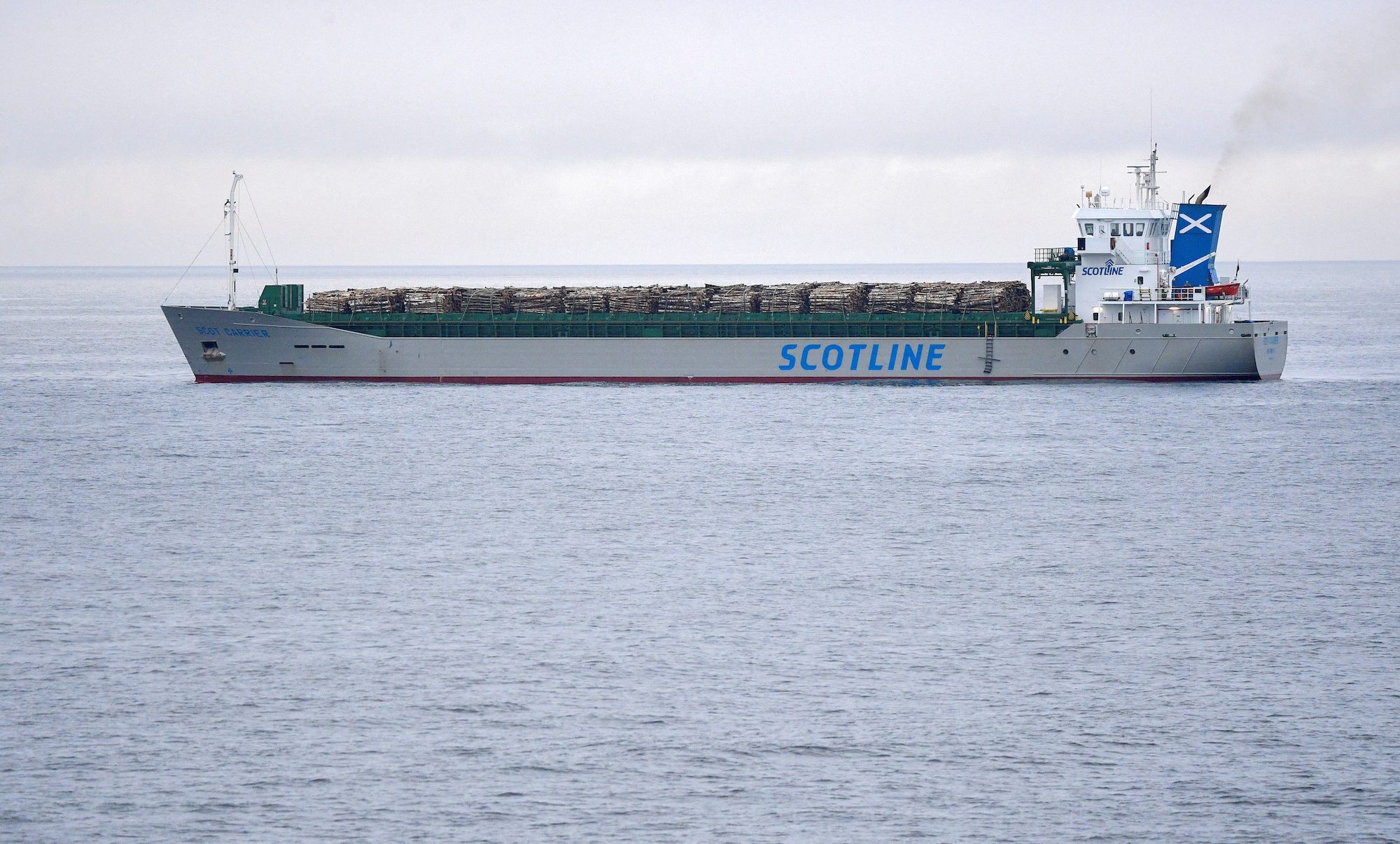
The British cargo ship Scot Carrier is pictured after colliding with the Danish cargo ship Karin Hoej, between Ystad and Bornholm, on the Baltic Sea December 13, 2021. Johan Nilsson/TT News Agency/via REUTERS

Mike Schuler  June 16, 2022

A British crew member of the Scot Carrier has pleaded guilty of manslaughter and sentenced to 1.5 years in prison after his ship collided with a barge last year in Baltic Sea, killing two Danish seafarers, Danish police said on Thursday.

The Scot Carrier, a 2018-built general cargo ship, collided with the 55-meter barge ‘Karin Hoj’ off the Baltic Sea island of Bornholm in fog early in the morning on December 13, 2021, causing the barge to capsize. Two crew members on board the barge were killed in the accident.

The 30-year-old Briton, who was on the bridge at the time of the accident, was one of two crew members detained by Swedish police following the incident on suspicion that they were intoxicated.

Danish police announced charges against the man earlier this month, accussing him of violations “section 241 of the Criminal Code for negligent manslaughter in particularly aggravating circumstances, among other things by having sailed the ship in an intoxicated state,” to which he pleaded guilty. He also pleaded guilty to charge of leaving the scene the collision without providing help or assistance to the crew on Karin Høj.

Shortly after the accident, Scot Carrier’s owner, Scotline Marine Holdings Limited, issued a statement providng some details of the incident and what happened afterwards. According to the company, the barge’s EPIRB system was activated, prompting Swedish authorities to contact the Scot Carrier for further information. However, the vessel had sailed on and didn’t alter course to return for up to 25 minutes after the collision.

“The 2nd Officer, who was on the bridge at the time requested the Master to come to the bridge of the ‘Scot Carrier’ where he reported contact with the Swedish Coastguard,” the company said at the time.

“Once all crew members had been accounted for and an initial damage assessment completed, the Scot Carrier returned to the location of the incident and launched a rescue boat to participate in the search and rescue operation. It is understood that the time between the incident and the Scot Carrier altering course to the location of the incident was under 25 minutes.”

A Copenhagen city court also gave the man a 12-year entry ban to Denmark and a temporary ban on sailing in Danish waters, Danish police said. 

“This is a case that has had some very serious consequences. Two families have lost a family member due to the actions and behavior of convicts. The length of the sentence reflects this seriousness, and I am satisfied that the court followed my sentence,” says special prosecutor Anders Larsson from the Copenhagen Police.

gcaptain.com

Norwegian Partnership Aims Fast-Track Remote Operations and Unmanned Vessels in the Offshore Services Sector

Photo: Haakon Nordvik:                            Mike Schuler      June 15, 2022

Solstad Offshore, DeepOcean Group and Østensjø Group have launched a partnership to established two joint ventures ; one, named Remota AS, will own and operate advanced onshore Remote Operations Centers; the other will focus on developing, own and operate unmanned surface vehicles (USVs).

The companies say the new JVs will help support the industry’s push to remote operations, helping to drive down operating costs and emissions for the marine and offshore industries.

Remota AS will own and operate the Remote Operations Centers, the first of which has been fully operational since 2019 in Haugesund, Norway, from where it manages DeepOcean’s ROVs in European waters in support of subsea installations and inspection, maintenance and repair (IMR) campaigns.

“This is about taking the current experience, track record and technology and bring it to a bigger scale, thereby making it a more powerful offering to the ocean-based industries. Remota will have operations and turnover from day one, and we will immediately double the support capacity at the Remote Operations Center in Haugesund,” said Øyvind Mikaelsen, CEO of DeepOcean.

The center will operate independently of its three owners and offer its services to all operators, vessel owners and service companies worldwide. While it will initially offer its services to offshore shipping companies and ROV-operators, the aim to expand its service to other industries as well.

“With our unique Remote Operations Center and the backing of three leading international supplier companies, we believe that Remota can offer customers a world leading remote offering for marine and subsea operations. I genuinely believe it can transform how traditional ocean-based industries approach their offshore work,” said Sveinung Soma, CEO of Remota.

The second joint venture, named USV AS, will be a separate company that will focus on investion in USVs equipped with a work-class ROV onboard. “This type of vessel is capable of considerably reducing operating expenses compared to conventional vessels that are utilized for subsea inspection, maintenance and repair work,” the companies said.

The USV technology has been developed by DeepOcean, with the two other partners participating in the final stage of the development. It is estimated that the USV solution can reduce CO2-emissions by more than 90 percent compared to a conventional offshore vessel when conducting subsea operations.

“By introducing USVs, we are moving the captain onshore who will remain in control over the offshore operations.This is an excellent way of reducing cost and the CO2 footprint. By limiting personnel exposure to offshore operations, this also introduces a brand new safety aspect. It also represents a significant business potential for the JV,” added Mikaelsen.

The three partners will each own 33.33 percent of the two new JVs.

“Remote operations are key to unlocking huge emission reductions and cost savings from the marine and offshore industries. The new joint ventures aim to fast-track the adoption of new remote technologies, which in turn will make ocean-based industries even more sustainable,” says Håvard Framnes, Investment Director of Østensjø, which owns and operates vessels within offshore wind, towage services, offshore oil and gas and offshore accommodation.

“Solstad, DeepOcean and Østensjø already have the technologies, competence and assets in place, but teaming up will further enhance the capacity, growth prospects and market penetration of our remote operations offering. Operators of offshore energy assets have challenged the supplier industry to deliver even more cost-efficient services. This is our response,” said Lars Peder Solstad, CEO of Solstad Offshore.

gcaptain.com