....δεν μπορώ παρά να μην επαναλάβω την τελευταία πρόταση του προέδρου.
In the past, the UGS has sometimes struggled to make its voice heard sufficiently when major industry changes are debated.
However, Mr Veniamis now observes that it is accorded “huge respect” throughout the shipping world. “We represent what we represent: more than 21% of the world fleet and more than 53% of the EU fleet.
We have a voice and it’s got to be strong. Some people may not like it, but I cannot help that,” he says.
Is he optimistic about Greek shipping’s future? “Of course I am,” Mr Veniamis says. “I can see the same flair for shipping in our younger generation.” The bedrock of Greek shipping’s success is “values and family”, he says. “If we lose that we will lose everything.”
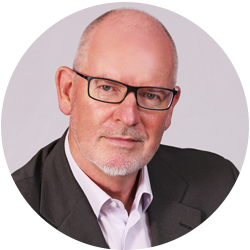
In a rare interview, Union of Greek Shipowners’ president Theodore Veniamis lays bare his disappointment with the lack of responsibility — as he sees it — in the rush to apply the global sulphur cap on marine fuels. With only a few weeks to go to enforcement, he also reveals his hopes there may still be a way to pause the process to allow time necessary to resolve critical issues
Others need to speak up on a ‘potentially catastrophic’ implementation of sulphur cap, says Greek shipowners’ leader
WHEN dry bulk shipowner Theodore Veniamis was first elected as president of the Union of Greek Shipowners, he was quick to put his own stamp on the job of leading the world’s largest national shipowners’ association.
Upfront about not being an avid participant in the social side of the shipping scene, Mr Veniamis’ ‘no frills’ approach seemed in step with the bracing times.
First elected in 2009, he took over the presidency as shipping plunged into recession and the age of austerity descended on Greece.
From the start, he established that the UGS would make public statements only when there was something important to say. Regular press conferences were abolished.
Press releases were reserved for rare occasions, such as Mr Veniamis’ swift, stinging riposte two years ago to criticism made of Greece’s shipping tax regime by Germany’s then finance minister Wolfgang Schäuble. Media interviews were simply unheard of.
Fast-forward to today: Mr Veniamis is now easily the longest-serving UGS president in nearly half a century and is, probably, on his last term in the job. He has been remarkably true to his word throughout this span.
So, accepting Lloyd’s List’s request for an interview is as clear a signal as any that he feels the industry has come to a critical juncture. The needle on the pressure gauge is pointing to maximum overload.
Collectively, Greeks are owners and operators of more shipping than any other nationality, so they tend to be leaders in terms of following the industry’s brass-tack issues.
“We are almost the only ones left around the world so committed and so hands-on in this business,” says Mr Veniamis.
Sulphur cap
Yet while the UGS closely follows the entire spectrum of technical, operational, legislative and legal issues pertaining to all sectors of shipping, the one that is clearly dominating its agenda — and causing the most sleepless nights — is the impending sulphur cap on marine fuels.
Greek owners were unhappy with the initial 2008 resolution of the International Maritime Organization’s Marine Environment Protection Committee to force a 0.5% limit on the sulphur content of marine fuel oil from the start of 2020, warning that the solutions should come from on shore and not target the ships.
The 2020 cut-off date was subject to global availability of compliant fuel that implied appropriate investments by oil companies. However, these have so far been inadequate, rendering the implementation date wrong, Mr Veniamis says.
As the IMO 2020 deadline has drawn nearer, the UGS has increasingly spoken up concerning glaring omissions in preparations for the new emissions curbs.
Initially a lone voice flagging up the practical problems of implementing the sulphur cap on time, the UGS was instrumental in co-ordinating submissions by several shipping bodies and major flag states that last year succeeded in getting the IMO to commit to new safety measures to complement the sulphur cap. However, the target date for these to be drafted is not until 2021.
Greek unease with the new regime has two main aspects.
On the safety front, there is a fear of unstable and unsafe fuels with lower flashpoints than the minimum required by the Safety of Life at Sea Convention; the incompatibility of different batches of blended fuels; inadequate safety margins for cat fines; and the possibility of extended ignition delays due to the weaker combustibility of lower-sulphur fuel that may be offered to the market.
Then there is the worry over the availability of safe fuel compatible with the new legislation. The tramp-bulk trades, in which Greek owners are primarily invested, will be more exposed to any shortage of supply due to their itinerant nature and far higher number of remote and diverse destinations than is true for the regular liner services.
This is by no means purely a Greek issue, the UGS underlines, saying the tramp-bulk sector — perhaps to the surprise of many regulators — represents 84% of world seaborne trade in terms of cargo tonne-miles.
“It is unthinkable that ships will be expected to run using untested and unsafe fuels,” says Mr Veniamis.
“The low-sulphur fuel requirement may lead to catastrophes, to loss of life. What will happen if several hundred ships, if not thousands, suffer engine room blackouts? I hope not, but we may see anarchy on the oceans,” he says.
“I am saying this from my heart, and I wonder how people responsible for pushing this are going to be able to sleep at night if our worst fears are realised.”
Failing to play the expected role
Responsibility, though, has been a commodity in short supply along the sulphur cap’s march towards implementation, he says.
In Mr Veniamis’ telling, the list of those that have failed to play the role expected of them reads like a who’s who of the maritime industry — including oil companies, bunkering firms, classification societies, ‘most’ P&I clubs, shipyards and engine manufacturers. “No one wants to take a position,” he says.
He personally wrote on at least two occasions to all major shipbuilders and engine manufacturers, seeking their advice on the safety aspects of operating with low-sulphur fuels. Not one replied, except for one engine maker that has just agreed to talk the matter over with the UGS.
“No oil company or bunkering company is even ISO-certified to provide low-sulphur marine fuels,” says Mr Veniamis.
“Nobody wants to guarantee anything. OCIMF [the Oil Companies Marine Forum] is not going to guarantee its members’ products. The only guidance they offered last year was that crews need to be educated.
“But while fuel suppliers and engine manufacturers are not providing any guarantees, how can the crew possibly be made responsible if something happens?”
Until now, Mr Veniamis has avoided calling for any delay to the 2020 enforcement date, such has been the political pressure to be seen to support the IMO’s global timetable for curbing emissions.
However, in the interim, there have been no answers to any of the questions that the UGS hoped would be addressed.
“We are talking about simple, basic questions,” says Mr Veniamis.
“If you ask any bunkering company if they can guarantee the spec, the compatibility and the commingling of fuels, they do not answer. If you ask an oil company if you can bunker in Singapore — which is one of the most organised ports for 2020 — you may be told ‘yes’.
“But if you ask the same company about being supplied with 0.5% [sulphur marine fuel], if you go to Brazil or South Africa, again no answer.
“And if there is no low-sulphur fuel available, and you have to bunker heavy fuel oil, any prudent owner or captain will want to carry at least 15% or more additional fuel on their ship than the voyage calculation requires. On arrival in the next port what do you do with this? Dump it into the sea? Clean the tanks?
“You should close your eyes and try to put yourself into the position of a shipowner, or a time-charterer,” he says. The suggestion seems to come from a more general feeling that empathy for the shipowner’s lot is rare.
Global needs
With only a few weeks to go before the regulation takes effect, the UGS estimates there could be less than 50% coverage of the industry’s global needs. Many refineries have not made the substantial investments required to provide fuels with the required lower sulphur content.
“Worldwide availability of safe 0.5% sulphur marine fuels is our primary concern and the issue that needs to be urgently addressed at IMO level, even at this late stage,” says Mr Veniamis.
“This should be delayed until the oil companies do the necessary investments and until a time that the market will be ready to actually meet these requirements.”
Increasingly, the UGS’s concerns have won support from other shipowners’ associations, particularly in Asia, he says.
Agreement with the Greek arguments is often privately expressed in the corridors of the IMO on Victoria Embankment in London and at forums elsewhere, but this has not always been reflected in the public position taken by the several countries and organisations.
“Some countries need to raise their voices now, at the very next opportunity” Mr Veniamis says. “We need to wake up some of our colleagues and some other states before it is too late. The way we are headed, they are going to make the biggest mistake of their lives.”
Mr Veniamis does not shrink from expressing what he considers hard truths. However, he says: “I don’t like fighting, especially when you go against people that you like, love and respect.”
This is a reference to the strong stand he has taken against exhaust gas-cleaning systems that, he argues, should have never been allowed by IMO as an alternative to low-sulphur fuel. However, the regretful tone could equally apply to his judgment on shipping legislators.
“We are a firm supporter of the IMO as the sole global regulator of the shipping industry,” he says.
“Shipping requires universal international rules and regulations. Until now, the world has trusted this system under the auspices of the IMO.
“But it needs rules that guarantee a global level playing field and do not put at risk the safety of life at sea and the environment.
“Unfortunately, the development of recent legislation, possibly under the weight of political pressure, has failed to do this. I believe that safety has not always been given the consideration it should have been given by policy makers and other stakeholders.
“On the pretext of environmental protection, commercial interests creep into the process of regulation, with detrimental effects. Regulations increasingly appear to be affected by considerations and interests outside the core shipping industry,” he says.
“But the environment cannot be kept safe without the safety of ships and their crews. The one is a precondition for the other.
“Business-friendly rules for shipping need to be developed taking into account the economics of world trade, actual operational parameters and the sustainability of shipping,” he says.
“That way, regulations will be workable and enforceable rather than merely aspirational and avoid mandating equipment or specifications that are not guaranteed to be available to the industry.”
Mr Veniamis believes the IMO has been “stubborn” about sticking to the timetable for the sulphur cap, partly due to political pressure but also due to the rocky experience of the ballast water management convention, when deadlines had to be postponed.
“The IMO should not be afraid of admitting mistakes,” he says.
Scrubbers were another mistake in the sulphur regulations, he has often said, prompting phone calls from members of the Clean Alliance of scrubber users that includes, among others, some prominent Greek owners, dismayed by the UGS’ strong negative stance on the issue.
Mr Veniamis’ main objection is that scrubber discharges are polluting. However, a secondary complaint is that the allowance of a minority of scrubber-equipped vessels effectively creates an unfair two-tier market in an industry that traditionally has been cited as a rare example of ‘perfect competition’.
“The scrubber club has criticised me, but I am elected to fight for the majority of our members,” he says.
“How can you be in favour of clean seas and clean air and then use something that pollutes? Are we interested in doing something tangible to save the planet, or are we only interested in making money, without bothering with ethics? Is that the message that we want to send to the young generation?” he asks.
Tide has turned
Mr Veniamis admits his was an isolated voice when he first started preaching against the regulatory loophole for scrubbers, but he now feels that the tide has turned. Several important coastal states and ports have introduced restrictions and the scrubber technology is now being re-evaluated at the IMO.
“In the next few weeks and months, I think you will see some other major countries declaring themselves against scrubbers,” he says. “I believe that it is a matter of time before they are phased out.”
Mr Veniamis is also appalled by some of the solutions being discussed for the longer-term decarbonisation of shipping. He rejects an emissions trading scheme for shipping, that seems again to be finding favour at the European Commission, as something that will do nothing to directly reduce CO2 and will, in fact, delay achievement of the industry’s environmental goals.
Meanwhile, operational efficiency indexing for individual ships is dismissed as “totally inappropriate and unworkable” for the tramp-bulk sector.
“Greek shipping is committed to the full decarbonisation of the shipping industry,” he says.
“There is a lot of talk about zero emissions, but this eventually requires the development of alternative, carbon-free fuels, as well as propulsion technologies, to support the owners and the needs of the world fleet.”
Until then, the UGS advocates “transparent and prescriptive” measures to operationally limit ships’ power or speed as the most appropriate course for the industry. These would effectively supplement a mandatory Ship Energy Efficiency Management Plan.
In the past, the UGS has sometimes struggled to make its voice heard sufficiently when major industry changes are debated. However, Mr Veniamis now observes that it is accorded “huge respect” throughout the shipping world.
“We represent what we represent: more than 21% of the world fleet and more than 53% of the EU fleet. We have a voice and it’s got to be strong. Some people may not like it, but I cannot help that,” he says.
Is he optimistic about Greek shipping’s future?
“Of course I am,” Mr Veniamis says. “I can see the same flair for shipping in our younger generation.” The bedrock of Greek shipping’s success is “values and family”, he says. “If we lose that we will lose everything.”